Breath and Love

The most beautiful things in the world cannot be seen or even touched, they must be felt with the heart.” Helen Keller

One might suspect that breathing and love would be intimately and inescapably connected..  We must “love to breathe” for the alternative is not quite acceptable – not breathing that is!  As a lover who takes our entire attention for long moments at a time – are we that attentive with our breath?

Let’s pretend for a moment that our beloved is named “Breath”.  How would our present relationship with our breathing change?  If Breath became shallow and contracted we might take some moments to notice and then soften shoulders, neck,  facial muscles and belly/pelvis so that Breath could expand, relax and feel our love.

In those moments when Breath leaves us all together for moments at a time, we might decide to invite Breath out for a walk, run, or a dance around the room embracing every inhale and exhale making certain that Breath feels they are the most important part of our life.

When Breath becomes all out of sorts coming and going in short bursts and irregular rhythms, we might offer a gentle touch or massage, or share laughter to soothe the “savage beast” and open Breath back again to the natural innate rhythm that Breath prefers to live within and where your relationship thrives.

It may be sort of a challenge to have Breath as a lover since you cannot see Breath,  nor touch Breath, but as Helen Keller says in the quote above – the most beautiful things must be felt in the heart.

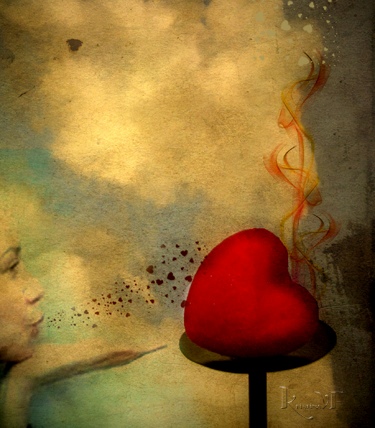
Breath makes love with Heart….and all is well.
Now, take a few more moments to read the answers that some very young children have given when asked the question –  What is Love?  Out of the mouths of babes….

What Is Love? Some Really Smart Kids May Have The Answer

*“When someone loves you, the way they say your name is different. You just know that your name is safe in their mouth.” – Billy, age 4

*“Love is when a girl puts on perfume and a boy puts on shaving cologne and they go out and smell each other.” – Karl, age 5

*“Love is when you go out to eat and give somebody most of your French fries without making them give you any of theirs.” – Chrissy, age 6

*“Love is what makes you smile when you’re tired.” – Terri, age 4

*“Love is when my mommy makes coffee for my daddy and she takes a sip before giving it to him, to make sure the taste is OK.” – Danny, age 7

*“Love is when you kiss all the time. Then when you get tired of kissing, you still want to be together and you talk more. My Mommy and Daddy are like that. They look gross when they kiss.” – Emily, age 8

*“Love is what’s in the room with you at Christmas if you stop opening presents and listen.” – Bobby, age 7

*“If you want to learn to love better, you should start with a friend who you hate,” – Nikka, age 6

*“Love is when you tell a guy you like his shirt, then he wears it everyday.” – Noelle, age 7

*“Love is like a little old woman and a little old man who are still friends even after they know each other so well.” – Tommy, age 6

*“During my piano recital, I was on a stage and I was scared. I looked at all the people watching me and saw my daddy waving and smiling. He was the only one doing that. I wasn’t scared anymore.” – Cindy, age 8

*“My mommy loves me more than anybody. You don’t see anyone else kissing me to sleep at night.” – Clare, age 6

*“Love is when Mommy gives Daddy the best piece of chicken.” – Elaine, age 5

*“Love is when Mommy sees Daddy smelly and sweaty and still says he is handsomer than Brad Pitt.” – Chris, age 7

*“Love is when your puppy licks your face even after you left him alone all day.” – Mary Ann, age 4

*“I know my older sister loves me because she gives me all her old clothes and has to go out and buy new ones.” – Lauren, age 4

*“When my grandmother got arthritis, she couldn’t bend over and paint her toenails anymore. So my grandfather does it for her all the time, even when his hands got arthritis too. That’s love.” – Rebecca, age 8

*“When you love somebody, your eyelashes go up and down and little stars come out of you.” – Karen, age 7

*“You really shouldn’t say ‘I love you’ unless you mean it. But if you mean it, you should say it a lot. People forget.” – Jessica, age 8

OTHER BLOGS BY GAYE ABBOTT:

www.WildlyFreeWoman.com
www.NaturalWealthJournal.com

Rumi, Thich Nhat Hanh, Buddha and Me

Being in a breathing body is a gift.  A gift which we often overlook as the mind takes control and leaves us scattering our life moments like seed on infertile ground, never really staying with one to cultivate, nourish and add to the soil so that the moment may flourish and grow in our love and attention.

Rumi says, “With life as short as a half-taken breath, don’t plant anything but love.”

Oh, how easy this is to forget.  The years seem to speed by with breaths half taken, skipped all together, or compromised by life choices.  Wouldn’t it be easier to just remember that our breath marks the moments of our life… beginning outside of the womb space  as we take our first inhale, and ending with our last out breath as we transition.

To remember that our full breathing is a measure of the love that we give to ourselves with each and every inhale, pause, and exhale. To remember that as we breathe fully there is more of us to plant the love that Rumi speaks of.

Thich Nhat Hanh says, “Life is available only in the present moment. If you abandon the present moment you cannot live the moments of your daily life deeply.

Like the seed above that falls on infertile ground , our abandoned moments left behind for something “more important” not only fail to grow, thrive and transform, but have never been felt.    Our breath provides an anchor to these very moments that are often cast aside like trash without a backwards glance, losing forever the opportunity to investigate what treasure and possibility may reside there.  Our lives are only made up of moments.  We forget. Our breath reminds us.

Buddha says, “The secret of health for both mind and body is not to mourn for the past, worry about the future, or anticipate troubles, but to live in the present moment wisely and earnestly.

Now we come right down to it.  As we breathe in and out we have the opportunity to pay attention in the moment with passion and to embody that moment.  Our emotions may be all over the place, bodies may fall ill from time to time, or we may be right smack in the middle of what we perceive as a tremendous challenge.  Are we in the moment….or are we trying to figure out how to get out of it based on past or future?

Use the breath as a guide, a tool, a muse if you will.  Know that each inhale and each exhale mark a moment of your life, using attention to recapture the moments and the breath to remind you that yes indeed you do have a body that is constantly sending you wise messages.  Listen…

Breathing in, I know that I can do anything.  Breathing out, I release all doubts and fears.  ME

OTHER BLOGS BY GAYE ABBOTT:

www.NaturalWealthJournal.com
www.WildlyFreeWoman.com

Breathing In A Danish Psychomotor View

Breathing Spaces is blessed to have a global readership which brings new perspectives on the breath to my attention.  I was most fortunate to connect with a Danish “psychomotor therapist” by the name of Siff L. E. Skovenborg just a month ago.

Siff  shared with me that Denmark has a high level education training program completely centered on a humanistic approach to movement, breath, and body awareness.  Of course I was intrigued and asked if she would write an article for BreathingSpaces.

Below you will find her article.  I invite you to dialog with Siff either via a comment here, or directly to her e-mail below.

Breathing In A Danish Psychomotor View

By Siff L. E. Skovenborg – psychomotor therapist

Being a therapist and teacher of psychomotricity in Denmark, working with breath and breathing patterns has for years been a special interest for me. Psychomotricity is a therapy with roots in phenomenology and body therapy (Reich and Lowen) as well as anatomy and physiology. The tradition however goes further back than that. The Danish psychomotoric tradition started in the 1930’s and sprung from dance, performance and gymnastics into a manual treatment therapy. The focus has always been to balance the work of the muscles and to increase the awareness of the body so that the bodily impulses could spring more freely and expressively. In that way the view of the body has roots in the humanistic approach.

The body is viewed as a totality – there’s no real division between mind and matter – only when we focus the attention to one dimension it seems to be a difference in expression. The same goes for the breath. The way we breathe is the way we live. Holding or controlling breath is holding or controlling the life we lead. Breathing solely in the belly or the chest is avoiding contact or relation to the emotions or sensations in these areas.

Still there are two ways for the breath to function: autonomic or voluntary. Voluntary is when you control the breath either to increase the expanse or to decrease or even stop breathing for a shorter or longer period. Still we breathe when sleeping, when being unaware or in need for more air for instance when exercising. However the controlled breathing can become a pattern that affects the autonomic function. Doing breathing exercises or being afraid of being in touch with emotional responses can limit where the breath goes, how much air we breathe in or out and how the muscles that make the breathing happen works.

So the work of a psychomotoric therapist is to open for the breathing space and for more autonomic control, so that you get a free, diverse breathing that regulates itself according to the situation. In order to do so, we have different approaches depending on the client’s history and resources (bodily/mentally and socially).

If a client that has learned a controlled breath for example in yoga classes and believes that a belly breath is the only right way to breathe. Here the therapist can choose to educate the client about the physiology of breathing and the autonomic function. If the client has the possibility of viewing a small baby in his or her sleep the variety of breathing can be seen and understood. Then exercises to learn to let the breath control itself can be relevant. Jacques Dropsy author of ‘The Well-Tuned Body’ describes such exercises, that we also use in psychomotricity.

Another example could be a client who is afraid to be in touch with emotions, you need to teach the client to deal with emotions first. We do that by letting the client describe the bodily sensations in a matter of a fact way. What is a matter of fact is the heart beating, the sweat, the pulse, the muscle tension, the breath. If the client tends to talk from the emotions or the mind, the therapist keeps helping the client back to a descriptive approach. When this approach succeeds, the client experiences that the emotion or sensation lingers off. Gradually he experiences mastery of being in the present with the sensation without changing it willingly or forcefully. When this is learned we can start working directly or indirectly with breath.

As a psychomotoric therapist we tend to begin the work with the breath indirectly, as the direct approach can make the client too aware of the breath to let it work automatically. Indirect work is for example manually or through exercises which increase the elasticity of connective tissue around the body, or by doing exercises that demand more oxygen and therefore forces the body to take deeper or stronger breaths.  Direct work is breathing exercises, manual treatment on primary or secondary breathing muscles, or breathing awareness. When working directly with breath we almost always return to exercises that help the client to return to autonomic breathing.

Which approaches the therapist chooses, depends on the type of client. Every client is met on his or her own terms and the therapist always strives to engage the client to investigate the bodily/emotional/mental phenomenon together.

For more information you are welcome to contact me at sisk@ucc.dk or post@kropsliv.dk

OTHER BLOGS BY GAYE ABBOTT:

www.WildlyFreeWoman.com
www.NaturalWealthJournal.com

Circle of Breath

“Breath is the bridge which connects life to consciousness, which unites your body to your thoughts.” ~ Thich Nhat Hanh

Walking on a country road in Oregon in June is a breath taking experience….well perhaps it is more of a breath giving experience for the lusciousness of nature is stunning!  This day my walk was to disconnect from a computer screen and to extend my entire being into the nature that grounds me and often provides very wise counsel.

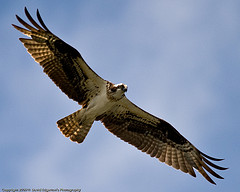
Most always I am inspired to write by and within the presence of nature, and this day was no different.  As I walked I happened to glance upwards and there was a rather large bird with wings outspread catching the wind so that almost no effort was asked to simply be a graceful, effortless presence in the air.  As I kept walking I noticed that the bird stayed with me circling over and over….and then when I stopped to have direct contact the bird came directly overhead and did a very tight circle over my head.

Then it came.  The title to this blog post was to be Circle of Breath.  Once I had gotten that and was pleased with myself for picking up the message from above….the bird disappeared – literally.    Well that was clear!

Nature is often like this and holds daily messages and reminders for us if we will only stop our endless, and sometimes frantic, daily business – and just simply breathe.  The breath truly is a bridge that connects and unites our body to our thoughts, and if smooth, natural, and easy, there will be no disconnects.

Circular breathing has been used for many thousands of years as a vehicle to access higher states of consciousness as in meditation, for downloading stress and imbalances, releasing old patterns from the body/mind, and certainly for musicians playing wind instruments (which is a very special technique).

It is also a natural rhythm for our being – inhale connected to exhale with a couple of pauses thrown in for good measure.  We come into this world and the circle begins at our first breath, and it is not broken until our last breath out.

The circle represents all encompassing cosmic unity.  Everywhere you look will be found this symbol from the stars and planets to the shape of our eyes.  In many cultures the circle is a sacred symbol and has many meanings, among them wholeness, unity, inclusion, union and focus.

As our breath circles within our body life is sustained and we come into union with every other life form.  For your breathing pleasure please go to the The Earth Breathing video below (which I have presented in a past post)…..and just be still in nature at least once daily this week to simply be present to what is being revealed, and to breathe with the Earth.

OTHER BLOGS BY GAYE ABBOTT:
www.WildlyFreeWoman.com
www.NaturalWealthJournal.com

Essensual Breath

“There are moments of insight when ancient truths do stand out more vividly,  
and one senses anew his relationship to the earth and to all life.  
Such moments are worth waiting for, and when they come  
in some unheralded instant of knowing,  
they are of the purest gold.”

Sigurd Olson

The ocean was never more than 5 blocks away growing up and in my first years was just over a short wall to the beach with

Mission Beach, San Diego, California

waves beckoning to a young child to come and play.  Given this you will understand why today I was so strongly drawn to the ocean that nothing could keep me away.

A 50 minute drive had me in direct proximity with the smell of salt air, the sound of waves rolling, and gulls sounding off in the air.  Even though the sun was hidden there were many children, adults, and dogs celebrating the gifts of being near to the sea (and in it!).

When our senses are evoked by nature, feelings of love, a burst of creativity, tantalizing smells, pleasing sounds, luscious tastes, or the tender touch of a hand – our breath responds.

When I left my home my breath was shallow and constricted.  After arriving at the beach and walking along the shore with lower legs caressed by salt water my breath became full and expanded.

What is it that connects our senses with the breath?  Perhaps it is the “essensual” connection with that which we are created from – our home inside on the deepest cellular level.  When our senses are filled – our breath is full.

Spending countless hours sitting in front of computers/electronics, watching television for some, and hooked into sedentary lifestyles and mind games we have forgotten that we even have a full array of senses that can give us unending pleasure, ignite our life dreams, and connect us to the whole of all that is around and within us.

What would it be like if today you took a “senses break”.  In other words choose one of your senses –   nose/smell; eyes/visual; ears/hearing; skin/touch – kinesthetic; or tongue/taste.  I invite you to take a 15 minute “sense break” and completely focus in with that particular sense.

What is your experience?  Has your breath changed as you allow your one sense to be the connector moment to moment?  Now see if you can focus into the moment with all 5 senses and notice how the breath may change.

All life that came before us depended upon senses to navigate their particular place in the world.  Their survival actually depended upon it.  How might we bring back a deeper connection with our senses…and thus with our breath? As this connection deepens, and in some cases returns, our direct experience of life in the moment expands.

In return, our full embodied breath can also ignite our senses.  Just taking one full breath activates the nasal passages/smell as we bring more air into and out of our body; increases visual depth and acuity as oxygen stimulates our visual receptors; creates a soft sound that tells us “we are alive and breathing”; expands our chest, ribcage, back and belly, massages organs and the lymphatic/circulatory systems, and causes increased sensitivity to touch as the breath moves in and out; and stimulates appetite to “taste” more of life as we increase our aliveness with a full breath.

What is holding you back from using your senses more to feel, hear, taste, touch and see?  Don’t miss huge parts of your life!  As Jon Kabat-Zin, Ph.D says in the video below: “Pay attention in an open-hearted way to the full range of your capacities and resources.”  

Breathe it in!!

Sense Mindfulness with Thich Nhat Hanh (a favorite person and teacher!) – Stop running and pay attention to the now with all of  your senses…..

OTHER BLOGS BY GAYE ABBOTT:

www.WildlyFreeWoman.com
www.NaturalWealthJournal.com