Breath As A Tap Root

Imagine if you will a very large dance floor where everyone is moving freely in their own rhythm weaving in and out among other bodies in motion.  Sometimes making contact with others by mutual consent to play with movement, dance, touch, and energy – and at other times silently exploring a unique world of your own.

In the very center of this dance floor is a woman who often breaks out in gales of laughter.  People move in and out of her field sometimes connecting physically and other times merely sending her love, smiles or energy – in other words nourishment.  Every time that this woman laughs it sends reverberations throughout the room and smiles break out everywhere.

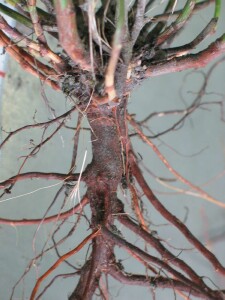
She is feeding the dance like a “tap root” from which other “roots” sprout laterally out in all directions.  This tap root forms the center upon which rides the well being and growth of all the other roots.  Without it the vitality of the organism as a whole would not continue and new growth might not be supported.

The breath is like a tap root with the lungs on the inside and the air from without giving and receiving within each inhale and exhale.  Our breath grounds us in the present moment and reminds us that we are here to thrive and passionately and compassionately live our lives to the best of our ability.

We share the nourishment with others in a deeply interconnected dance of life that has been choreographed expressly for us by a central force so strong that often we just begin to imagine and embody the power we are being given.  The tap root continually reminds us that a fully lived life is within a fully embodied creative breath.

If you have never even thought about moving freely from the tap root of your breath…you might give it a try.  A breathing space of ecstatic, free, unrestricted movement from the center of your being!

WEBSITE:  www.ResonanceWithLife.com

OTHER BLOGS BY GAYE ABBOTT:

www.NaturalWealthJournal.com
www.WildlyFreeWoman.com

The Most Important Breathing Space Of All

On this day, in celebration of the role of motherhood bestowed upon many of us, I took a walk out into nature.  Reflecting on the richness of having given birth to 3 unique and amazing sons and having been given birth to by my own mother into this lifetime,  I walked softly down the country road listening to, feeling into,  and seeing the natural order of things all around me with immense appreciation and gratitude.

The sound of wind,  vast clouds with spaces of blue sky and sun peaking through, rivers flowing strongly from the abundance of rain, Spring flowers doting the grasslands, trees magnificent in their leafing out, bird song abounding, baby lambs all nestled together  – all of the elements collaborating to bring balance, wealth and meaning to our lives.

This is our breathing space – the space of the largest and most important mother we shall ever know.  Because of her we BREATHE.  Because of the intricate interconnection of all life here on this planet we exist at all.

Let today be a celebration of all that is “mother” to each and every one of us – human, all species, nature, and cosmos.  The mystery of it all would astound us even more if we knew exactly how everything dances together on our behalf.

We are indeed the ones we have been waiting for.  It is in our hands, minds, hearts and souls to protect and bring back into balance that which gives us life….the most important Breathing Space of all – Mother Earth.

OTHER BLOGS BY GAYE ABBOTT:

www.WildlyFreeWoman.com

www.NaturalWealthJournal.com

Many Paths to Stillness of the Breath

“When the breath is irregular, the mind is also unsteady; but when the breath is still, so is the mind.” ~ Pradipika

I start with this quote as I am going to venture a bit away from it…well maybe way off from it.  But not really, because after practicing the primate Hu Breath I do believe that there will be so much opening in your body, that the return to stillness will be automatic -and deeper – and all irregularities will simply vanish!  There are many paths to reach a destination I say…

However, you may find yourself laughing with abandon before you finish this little practice.  Caryn McHose and Kevin Frank have written a delightful book called, How Life Moves, Explorations in Meaning and Body Awareness.  The book literally fell off my shelf today as I was sorting through books I want to keep in my move to Austin, and those that I will be gifting away.  Let’s just say that I will be keeping this one!

Directions follow which come straight from the book. This practice is the invention of Emilie Conrad, the founder of Continuum.

To do the Hu Breath, start by sitting comfortably on the floor, on a chair, or atop a physioball.  Breathe through your mouth.  On each exhale make a “ha” or “hee” or “hu” sound.  Breathe continuously in and out, moderately quickly, creating a visible pumping of the belly and letting the mouth experiment with different Simian expressions.  (that means monkey movements and sounds my friends!)  Allow the rhythm of the breath to pulse the body.  Play with the movement using an imagined sense of monkey and jungle persona to inspire the shapes of the movement.”

Personally I suggest that if you have a physioball, use it (bouncing is absolutely delicious!), as it creates another element to freeing your body and breath into movement freedom and instant laughter!  Breathing Spaces are only limited if you inhibit them….so I say go for it today and try on something completely different.  (even though I suspect that for some of you this will be just normal everyday behavior!)  Enjoy and let me know how you feel!!

OTHER BLOGS BY GAYE ABBOTT:

www.WildlyFreeWoman.com

www.NaturalWealthJournal.com

Breath of Flight – Ride The Wave

“Life is in the breath.  One who half breathes, half lives.”  Chinese Proverb

As I write this 1,000’s of feet up in the air in a plane, taking a deep breath seems to take on a very different set of life skills.  Why is that?  Recycled air, crunched seating with one’s body confined to a very small area of moving room, cabin pressure, and oh those little tiny bathrooms that when toilets are flushed you wonder if you just might be sucked down and out into the wild blue yonder!

This post is dedicated to the deep diaphragmatic breath.  I call it the breath of flight, not only because I am writing this confined to that little tiny seat and breathing recycled air, but because I believe that this breath assists us to take flight in our lives.

Used in many different situations, this deep breath marks moments when we are reminded that we are indeed biological creatures that need air to function.  Often we find ourselves taking a deep breath because all of a sudden we realize that we have not been breathing at all…or I guess I should say very shallowly.  For periods of time when focused on something outside of our bodies – which is often by the way – we hold our breath.

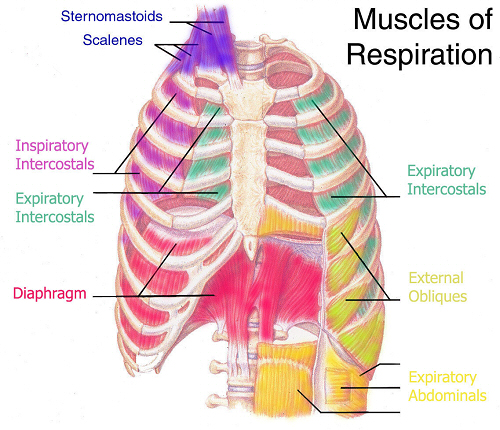
How in the world can we remain more conscious to breathe fully with all of our primary breathing muscles instead of secondary ones?  Most people use secondary breath muscles which are the muscles of the front of the neck, pectoralis muscles in the chest, sternocleidomastoid, and the upper trapezius.

What are not used as often are the primary muscles of breathing which include the diaphragm, intercostal (between the ribs) and the abdominal muscles that are meant to give us that full-bodied breathing experience that our bodies innately crave.

Awareness is the key here.  What if we took Breath Awareness Breaks (BAB’s for short) instead of coffee breaks?  Might we feel more enlivened, relaxed, peaceful, focused and creative?   The daily practice of rhythmic (wave-like) diaphragmatic breathing with gradual and equal prolongation of the inhalation and exhalation will enhance the body’s ability to experience a sense of deep relaxation and rest, free of stress and strain, and with a marked feeling of calm and peace.

Diaphragmatic Wave Breath Practice:

*Sit upright in a chair with both feet on the floor or ground, or lay down with something under your knees and head if necessary.  (No the latter position will not work in the airplane!)

*Place your hands on your legs palm side down, if you are seated.  If lying down rest your hands on your belly to encourage the inhale to expand there first.

*Take 3 deep breaths with mouth slightly open and relax – feeling the stress exit your body and the toxic mental chatter drain away. Let your body relax/soften into the chair, or the surface you are lying on.

*Inhale completely through your nostrils with your mouth closed allowing the lower abdomen/stomach area to push out/rise up as the air moves in.  (contraction of diaphragm – it moves down.)

*Exhale completely through the nostrils releasing all of the air out and drawing the naval (belly button) down towards your spine and up under the ribs. (relaxing of diaphragm – it relaxes back up.) The wave of breath unfolds itself to the shore of the next pause.

*Do this practice in a series of 7 breaths.  Rest for 2 minutes while being aware of your breathing and how you feel in your body, mind and emotions.  Repeat the process two more times.

This breath massages all of the internal organs, encourages the movement and flow of the lymphatic and vascular systems,  – and of course exercises the respiratory system which requires moment to moment workouts to keep it healthy and strong.

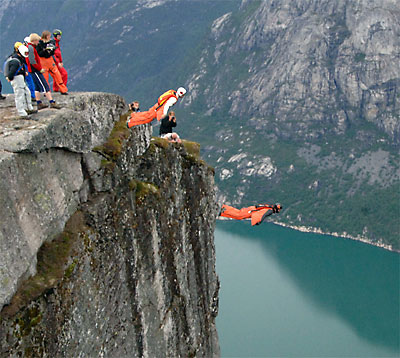
This is especially important when we are sitting for long periods of time or inactive physically.  Next time that you fly, whether in an airplane or on your next stepping off of the proverbial cliff for a life change flight, put your attention on the wave breath and see what happens.

To become a welcome vessel for the breath is to live life without trying to control, grasp, or push away.”  Donna Farhi, The Breathing Book

***********************************

Breathing 101:  We are all breathing in some fashion, even when we are not aware of our breath, but the normal patterns of breathing are usually shallow, restricted, and contain many holding patterns.  These reflect deep imbalances in our systems.  When our breathing patterns are weak, we may have low energy and find ourselves easily fatigued and more emotionally stressed.  When our breathing patterns are deep and strong, we have increased endurance, stamina, and a sense of well-being.

For further information about this 2 hour workshop, please go to the tab above and consider contacting Gaye Abbott, RYT for an experience that will unlock your potential to thrive in life through breath awareness.

OTHER BLOGS BY GAYE ABBOTT:

www.WildlyFreeWoman.com

www.NaturalWealthJournal.com

Breathing To Be 100!

90-year-old Australian Rower, Ralph Howard

The 80 and 90 year old women and men that I see frequently in the medical clinic never cease to amaze me.  Many are still driving, living on their own, dress beautifully (and colorfully!) and have a zest for life reflected in their curiosity, creativity, sense of humor, and varied interests that I find contagious!  I often ask them how old they feel inside and I often get the answer of at least 50 years younger than their actual age.

I remember when I turned 50, and was having a very difficult time of it.  I asked a beautiful woman in her 70’s how old she felt inside and she paused a bit and then said – well I do believe I feel about 24, until I pass by a mirror and happen to glance at my image she laughed.  It was then that I realized that aging is an inside job – and how healthy and vital we remain through the years that we are given is a great deal in our hands, our minds, our hearts – and our practices.

90-year-old Andora Quimby started weight training at age 78!

Here is a portion of a blog post on Living To Be 100 from David Dowell – Creator of OomphTV (who has a mother in her 80’s that teaches yoga and has recently launched, with her daughter, a business called The Green Buddha)

Be sure to look for Breathing Spaces additional “secret”!

*****************
Today I ran across an article from Health magazine.
Apparently those born after the year 2000 are more likely than ever to live to 100, according to research from Denmark. Good news for the kids, but what about us grown-ups?
Genetics do play a big factor in how long you live (thank you grandparents), but only somewhere between 20% and 50%, depending on the experts you ask. That still leaves over 50% up to YOU! Walter Bortz II, MD, a clinical associate professor of medicine at Stanford, suggests how you can improve your odds of a long life and reduce disease.

We can call this The Walter Bortz II, MD, Secrets to a Long Life:
*Bulk up on fruits and veggies, +5 years (plant based whole foods diets reduce disease)
*Exercise five days a week, +2 to +4 years (move and elevate your heart rate for a half-hour a day, minimum)
*Reduce stress, up to +6 years (from meditation to music to movement to art therapy. Find something that work for you.
*Get a hobby, +2 years (provides a sense of accomplishment.)
*Floss, +6.4 years (removing harmful bacteria reduces stroke and heart attack risks.)
*Vacation, +1 to +2 years (leisure is a great stress reliever!)
*Sleep seven to eight hours nightly, +2 years (sleep assists cell repair.)
*Have sex, +3 to +5 years (releases feel good hormones and burns about 200 calories, too!)
Thought you would like to know!

*******************

*BreathingSpaces Addition:

Breathe Consciously and Fully, +7 years (assists body/mind/heart/spirit to stay vital, energetic, and in balance/harmony!  Also great stress reliever and disease buster!! )

After all is said and done my vote is for quality, and the above “good habits” can certainly contribute to that.   By the way, it is never too late to start!  Let us know if there are additional practices that you would add!

Addendum: For more info on Andora Quimby

OTHER BLOGS BY GAYE ABBOTT:

www.WildlyFreeWoman.com

www.DivineWealthJournal.com Most Recent Post: Keeping Your Head When Others Are Losing Theirs